
A Church Without a Zip Code
The Church Is Moving Again ...and It May Not Look Like We Expected

In this Bonus Conversation on the Starfish and the Church podcast, I sat down with Shane Boyd from Gathering of Nomads.
At first glance, the conversation sounds almost novelty-level niche. RVs. Campgrounds. Nomadic families. Full-time travelers drifting across America with Starlink internet, diesel generators, and coffee mugs rattling in the cabinets while they chase decent weather across state lines.
But somewhere underneath the stories about campfires, fuel prices, and life on the road, another conversation kept surfacing. A much deeper one. What does it mean to be the Church when people no longer stay still? And maybe even more unsettling: What happens when the Gospel begins moving faster than our structures can comfortably contain?
For most of us, church has become deeply tied to stable geography. A neighborhood. A parish. A campus. A building. A zip code.
Even the language reveals it.
We “attend” somewhere.
We “go” to church.
We “invite” people to a place and program called “church.”.
But what do you do when the mission field itself refuses to stay put? What happens when the people you are trying to pastor are only in one place for two weeks before they disappear into Arizona, Montana, Missouri, or Maine?
How do you plant a church in a community without a zip code?
That question sat underneath almost everything Shane and I discussed, but what stayed with me is the way this nomadic missionary life has quietly cultivated a rediscovery of the Church beneath many of our assumptions about church.
I know that rediscovery is happening in a lot of places right now. Not only among RVers, but among artists, recovery communities, gamers, young adults, immigrants, neighborhood tables, tattoo artists, travel baseball parents, entrepreneurs, and ordinary disciples beginning to wake up to the realization that they are already standing inside a mission field.
They just never realized that’s what it was.
The People We Forgot Were There
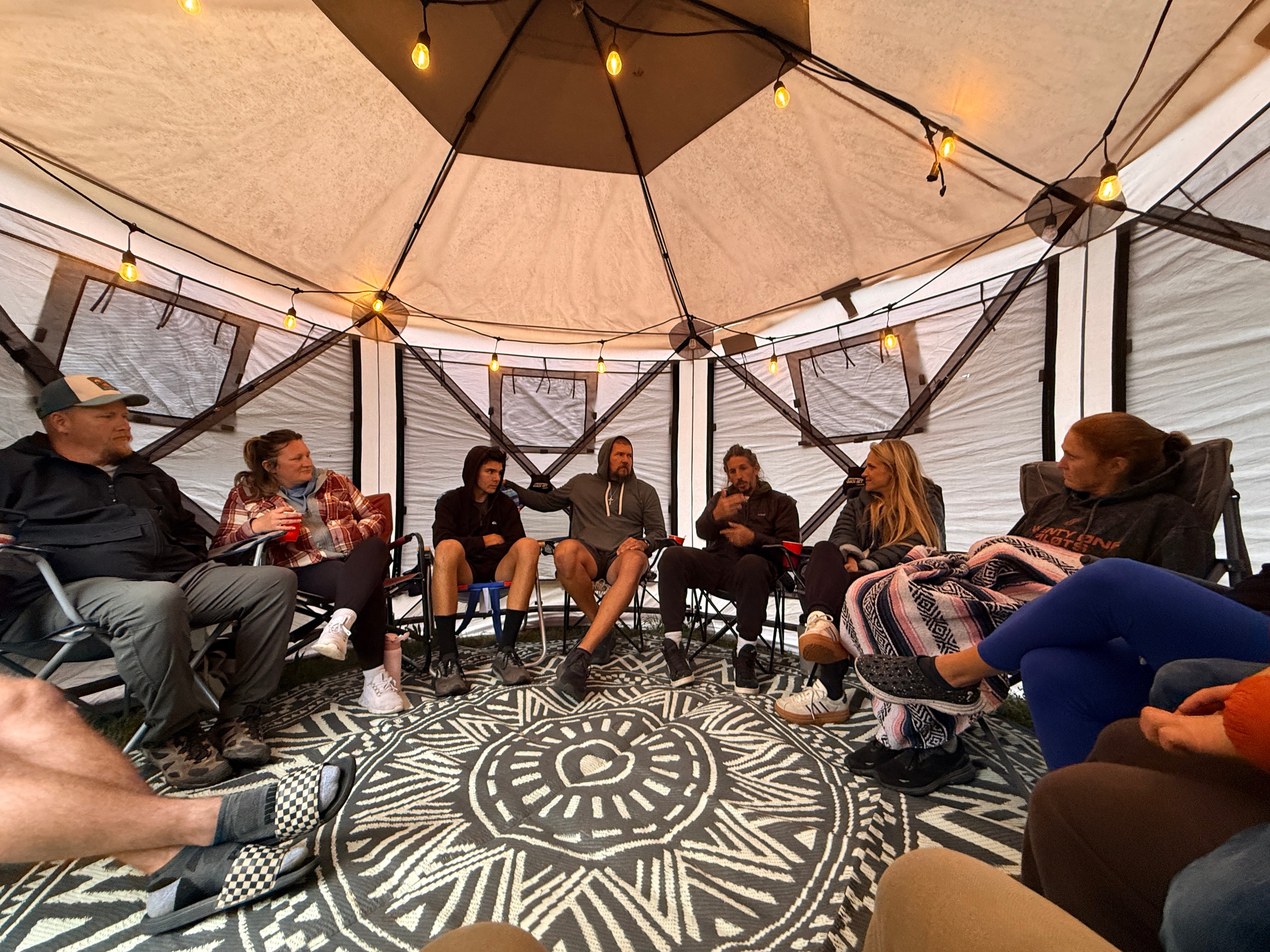
Shane shared that there are now more than 11 million people living in RVs across America. Some are retired. Some are chasing freedom. Some are escaping economic pressure. Some are simply tired. Tired of the pace. Tired of the noise. Tired of trying to sustain a life that no longer feels sustainable. Most churches barely notice they exist.
That struck me deeply because the modern church in America has largely been organized around stationary assumptions. We have become exceptionally good at ministering to settled people who live predictable lives inside stable geography.
But increasingly, that is not the world we inhabit anymore.
In the book of Acts, the Gospel spread through roads, ports, marketplaces, households, relational networks, traveling workers, displaced refugees, merchants, wandering apostles, and ordinary believers carrying the story of Jesus from city to city. Christianity was decentralized long before it was institutionalized. It moved relationally before it moved organizationally.
Somewhere along the way, we became so accustomed to centralization that we began assuming the structure itself was the mission.
“You’re Not Going to Plant a Church”
To be clear, Shane is not “anti” organized church, and neither am I.. Quite the opposite. One of the things I appreciated most in our conversation was the deep honor he still carries for the traditional church. He openly acknowledged that he came to Jesus through a local predominant model church.
But Shane’s own journey eventually led him into a profound theological disorientation. Not because he stopped loving the Church, but because he began wrestling with what the Church actually is.
Originally, the RV life was supposed to be temporary. A practical solution. A season. He still imagined eventually returning to a garage full of tools and projects and a more settled version of life. But while living among full-time RVers, he slowly realized something unsettling: there was almost no meaningful spiritual infrastructure among this massive and rapidly growing people group.
People watched church online when they could. Some had disconnected entirely. Others carried spiritual curiosity but no community. Most were moving too frequently for traditional systems to meaningfully engage them.
As Shane wrestled with how you could possibly “plant a church” among constantly moving people, he sensed the Spirit whisper something profoundly simple:
“You’re not going to plant a church. You’re going to plant people.”
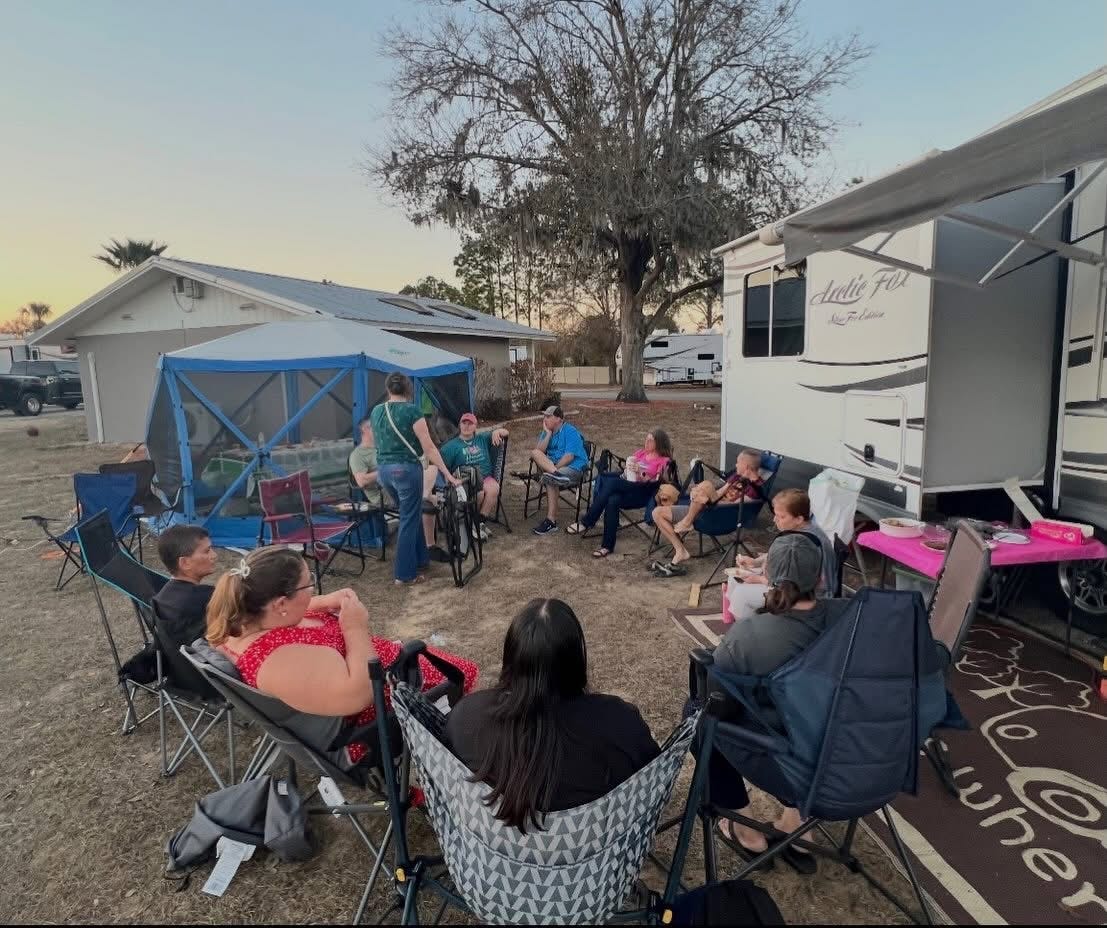
That sentence contains an entire missiology and downstream, an ecclesiology.
Once the focus shifts from planting centralized gatherings to planting people deeply formed in the way of Jesus, almost every metric changes. The primary question is no longer: “How do we gather people consistently?” It becomes: “How do we form people who can carry the life of Jesus wherever they go?”
That is an entirely different imagination.
I think this is one of the places where many of us are quietly being re-converted right now. Not away from the Church. But deeper into the missionary nature of the Church.
At one point, Shane reflected on reading Matthew 6 again, particularly Jesus’ words about seeking first the Kingdom. He described feeling like the Spirit gave him a gut punch because he realized how subtly his energy had drifted toward building ministry structures rather than participating in the Kingdom itself.
I felt that in my bones.
Most current ministry models have a gravity that constantly pulls us toward maintenance. Toward preserving systems, protecting platforms, sustaining budgets, growing attendance, refining branding, managing complexity.
None of those things are inherently bad, but they can quietly become central, especially in a culture where centralized success is easier to measure than transformed lives.
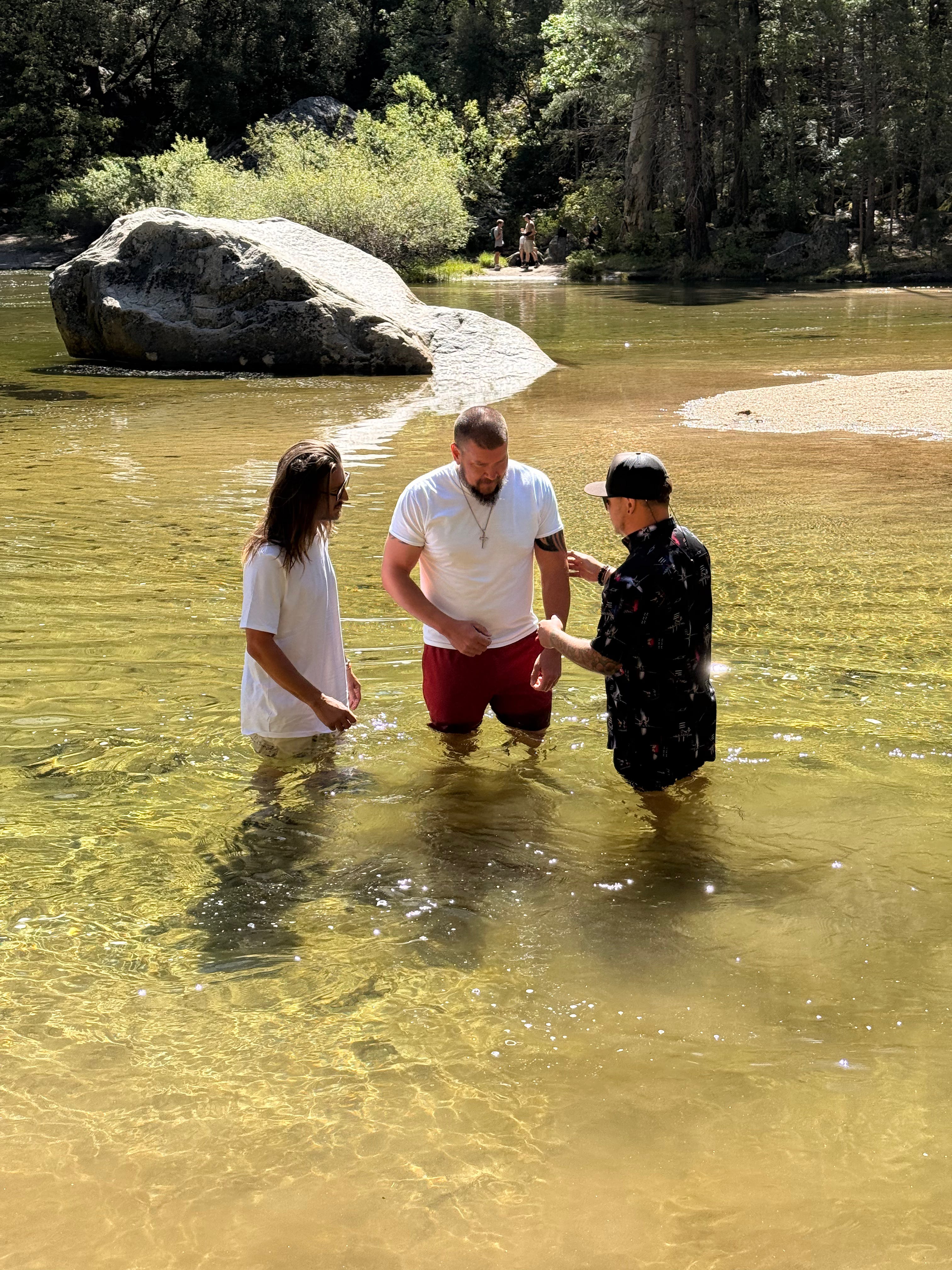
Maybe that is part of why these decentralized expressions can feel both inspiring and threatening at the same time. They expose how often we unconsciously equate the survival of our structures with the advancement of the Kingdom.
The Church has always been far more durable than our structures.Rome could not stop it.
Persecution could not stop it. Scattered believers carried it across the known world without podcasts, buildings, budgets, livestreams, or strategic planning retreats.
Which honestly is both deeply comforting and slightly offensive to our organizational instincts.
Witnesses, Not Experts
There was another moment in the conversation that has stayed with me as well. Shane described a man named Adam, an ex-military RVer struggling to adapt to civilian life. At first, Adam was mostly just the rough-around-the-edges neighbor yelling across the campsite:
“Come over. Fire’s at five.”
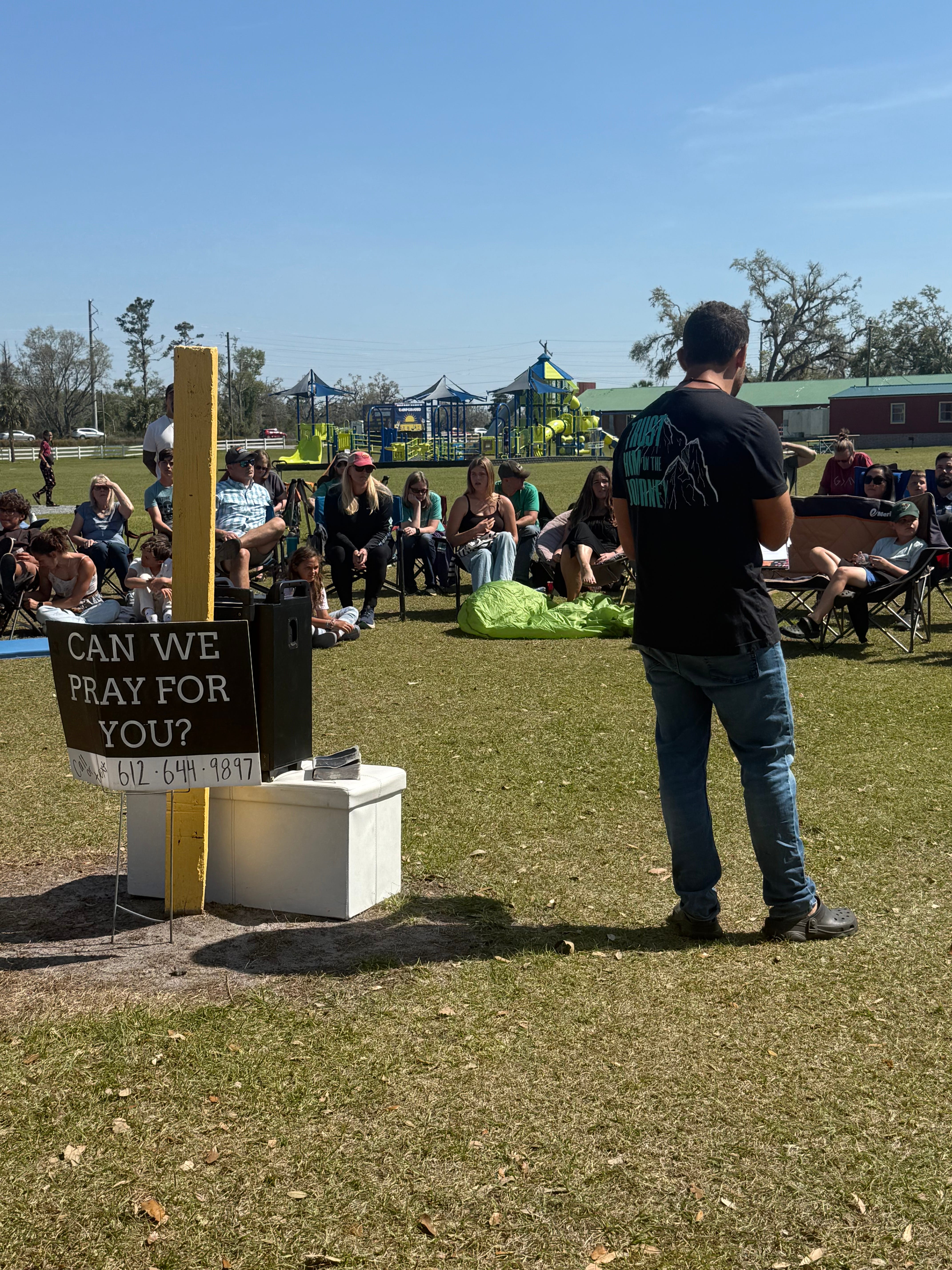
Over time, through ordinary proximity, friendship, prayer, and conversation, something began happening. Questions surfaced. Curiosity emerged. Slowly, painfully, the Spirit began drawing him toward Jesus.
Eventually Adam surrendered his life to Christ. Then came the long, beautiful process Scripture calls sanctification. Old coping mechanisms started dying. New desires emerged. Freedom slowly began taking root.
What struck me most was not merely that Adam came to faith. It was how quickly he began sharing what Jesus was doing in his life simple because he had become a witness, not because he felt fully prepared or that he had mastered anything.
That distinction matters more than we often realize.
Somewhere along the way, many Christians absorbed the subtle idea that meaningful participation in the mission of God requires expertise first. Seminary first. Readiness first. Confidence first.
But in the New Testament, people often began witnessing almost immediately after encountering Jesus.
That surfaced beautifully when Shane reflected on Acts 1:8 and the connection between witness and martyrdom. A witness is not merely someone who possesses information. A witness is someone whose old life is slowly dying while Christ becomes more visible.
That is why authentic discipleship always carries both beauty and surrender together.
I think that is part of what makes these decentralized movements so compelling right now. They are imperfect. Sometimes messy. Occasionally disorganized. But they often carry a kind of lived authenticity that many people are starving for.
Not polished religion or carefully curated experiences…just ordinary people trying to follow Jesus together in real life.
Toward the end of our conversation, Shane said something that I have not stopped thinking about. He talked about how much ministry training focuses on understanding “culture,” but the Spirit began showing him the importance of subcultures.
That observation feels incredibly important right now. Increasingly, people no longer primarily organize their lives around geography alone. They organize around affinity, identity, vocation, passion, trauma, interest, and shared experience.
Car communities.
Fitness groups.
Artists.
Outdoor adventurers.
Recovery circles.
Digital creators.
Travel communities.
Third spaces.
And maybe one of the great failures of the modern church has been assuming people would continue coming to us instead of recognizing that Jesus has already embedded His people among them.
That changes everything. ‘The question isn’t, “How do we attract people to centralized church, so we can ‘reach’ them?” The question is, “How do we recognize, equip, and release the disciples already living inside these subcultures?”
That is a very different posture.
Maybe that is what I found most beautiful about Shane’s story. He was not trying to create a trendy alternative church model. He was trying to say yes to Jesus inside a people group most churches had forgotten existed.
This conversation is ultimately about RVs, it is about recovering missionary imagination. It is about rediscovering that the Church is ultimately a people, not a place. It is about loosening our grip on the assumption that centralized structures are the primary way the Kingdom moves. It is about ordinary disciples waking up to the possibility that where they already live, work, gather, travel, create, struggle, and belong may actually be holy ground.
And maybe most of all, it is about trusting the Spirit again.
Let’s go.
I hope you enjoy this Bonus Conversation. I sure did!
As an RVer myself, I find this very compelling. I love that you are pushing us to think outside the traditional church framework. Great article.
"“You’re not going to plant a church. You’re going to plant people" sounds a lot more like Matthew 28:18-20 than wait, greet, gather, engage, entertain and educate, imho. Thank you for this!